skip to main |
skip to sidebar
3-D Printing or Additive Manufacturing has been around since the late 70s. This process makes a product from a 3-D representation of an object. Building up layers on layers of usually plastic or metal material. An item can be "printed" over and over. This smacks of the Star Trek's replicators. Ask the computer for something (like food) and viola it appears.
Prices of the early 3-D printers were astronomical. In the past 3 years prices have come down to "stromical". They are still expensive, but in the thousands of dollars versus hundreds and tens of thousands of dollars. What also has improved is 3-D scanning. There are holographic scanners now available that will plot out any object so that it can be sent to the 3-D Printer almost instantly after being scanned. Hand held laser scanners can quickly get all the coordinates for an object. Problems do happen if the object has shiny or reflective surfaces. There are also contact scanners and volume scanners that can handle those objects.
I've seen on two early morning talk shows (not that I watch them regularly) table top 3-D printers making models for the hosts. On my favorite geek show - The Big Bang Theory - two of the geeks bought a 3-D scanner and make life like dolls of themselves. Of course they didn't show the process, because if they did it would have taken way more then the 1/2 hour the show runs.
The applications for 3-D printing are limited only by human imagination. Parts for industry (shown above) are one application that is in use today. Producing models for prototype products is another use. I don't know of anyone making food at this time. AutoCad corporation (the leading CAD software company) now makes a program called 123D Creatures, that lets you design a monster and then print it out on your 3-D printer. Of course the monsters are less then 6 inches in height, but hey isn't that cool?
The future of 3-D printing appears very bright (the leader of the 3-Dprinter makers is MAKERBOT) so it may not be too far in the future when you too have a 3-D printer and scanner on your desktop.
I just got an email from one of my credit card providers telling me about their new iphone/Android app. I can pay my bill, find out my balance, view activity, and view my minimum payment. After thinking about those items, I decided quickly that I do not need to do those items on my phone. The email jogged my memory to the recent GEICO ad with the pig on the plane (you knew they were going to hit on 'When Pigs Fly'), I don't need to do my insurance on the phone, so sorry Nationwide don't develop an app for me.
There is this fever going around the corporate world that you have to have an app for your business to succeed. Well I hate to break it to the business that are spending big bucks on apps development, but the fact is that not every business needs an app. Maybe I'm on old stick in the mud technology guy, but I don't think so. I love having stock updates, weather forecasts, breaking news and getting sport scores on my phone. I even like getting ski reports (thanks Wintergreen!) navigation aids and suggestions for where to eat or buy something on my phone. Picking emails and limited game playing are also welcome. Doing major financial work on a phone is just not going to be my cup of tea. I barely like doing it on my laptop/desktop. I do pay most of my bills on line, but pay them on my phone? Why? Maybe some of my customers can clue me in this need.
So what apps make sense to have on your phone? I've listed some great categories above. I love having a camera where I can instantly post the picture to facebook. I like seeing facebook updates. I don't tweet from my phone, but then again I don't tweet from anywhere else so that's not relevant. I don't order items from the phone because the screen is so small. I'm not sure what I'm getting. I do have a 4.3" phone screen, but making a financial transaction when I may or may not be 100% sure of what I've done (no print capability) is not for me. I like looking up information on the Internet so have a browser or 2 and voice commands is very cool. I do use the airline apps when I travel and use an app called Tripit that reminds me of my schedules. I even have an app that turns my phone into a flash light (used that during the 6 day power outage this summer).
Let me know if you have a favorite app I haven't covered and I'll pass it on to the PCSS customer base!
One of the services PCSS offers for small business is a Technology Assessment. For no cost to the business, PCSS will come in and look at how your business is using technology. A written and oral report will be given to the business as to the state of their technology and recommendations for cost savings and productivity improvement technology. Also given are opportunities to use technology to increase the businesses revenue. Here are some of the items that we take a look at:
Where is the business right now? An inventory of what PCs/laptops/printers/monitors/networking that the business has. An estimate of what the business is spending on technology per year. Items we review include printing costs, licensing/leasing costs, age of PCs and replacement costs, Internet provider costs, email provider costs, web page/facebook page costs, telephone system costs.
Where can the business cut costs? Would a printer or multifunction machine with lower supply costs save the business money? Getting a competitive price on Internet service often results in decreased costs. Long distance and basic telephone savings by using VOIP technology. Are your technology costs reasonable for 2013? ie. are you paying too much for what you are getting?
Where can the business use technology to improve their profit margin? Is the business being reimbursed properly for the services they use and are providing ? Are there new technologies that can improve productivity or lead to new revenue streams?
These are just a few questions that PCSS can help your business answer as you look to have a more profitable 2013. Using technology should be viewed as a positive in your business not just a line item(s) in the expense column.
Dear blog friends. Thank you for reading my blog this past year. I am trying for 2 posts per month in 2013 so if you don't see one for a while please send me a reminder. This blog let's talk about the latest in Technology and what it could mean for you!
We are still getting used to our new Motorola Droid RAZR cell phones. Today we investigated the voice recognition capabilities. We have Android Jelly Bean (the latest) operating system. It has two apps that provide voice support. Voice Command lets you use the phone functions. You start the Voice Command app then can say things like Call Home and it will! I have found it to be pretty accurate as long as the name you want to call isn't very ethnic or complicated. You can also ask it to dial a number and it will. Both are very handy for in the car dialing. The negative is that you have to start the app by hand. The other app is Voice Search. Think of this as Google Search by voice. The results vary depending on what question word you use (Where - gets google Maps, Who and What get Google search results, Temperature questions gets the Weather App, and Why questions are a mixed bag). Voice Search takes some getting used to, but is quicker then typing in a search.
 You never know where you will learn about new technologies. I had breakfast this morning with a childhood friend. She is a retired librarian and enjoys technology, but certainly not a geek. She asked me if I had heard of Raspberry Pi. After the yes I love all kinds of pies comment, she let me know that this was a credit card size computer (bare bones) that runs Linux. Cost is $25 or $35 depending on memory and ports. You provide the TV (one with HDMI or composite input), Keyboard, Mouse, Operating System (Linux Debian recommended, though others will work), and power supply are extra. You actually load the Linux on an SD card that can provide storage and other program files. The company making this product is a charity based in the UK and did this to encourage students to learn about computers. Here is a link to their site: http://www.raspberrypi.org/
I saw the Apple iPad mini up close and have several thoughts. It is nicely designed and may be a great tablet for kids. Its a bit small for the browsing I like to do. I was constantly increasing the size of type and that got to be aggravating. Angry Birds played great on it (as did many other game apps). Reading a book on it worked fine. This will probably be a pretty good sales item for Apple due to price and opening up the child owning an iPad market. For $329 (similar to the gaming systems out there) you can keep a child actively entertained. The dangers of the Internet remain and I have NOT seen a good parental control app for the iPad. Let me know if you see one!
Merry Christmas to all and to all a Very Happy New Year.
The Moga family now have new phones. We chose the Motorola Droid Razr M phone for both Mr. and Mrs. Moga. The spousal unit has a white phone while the artistically conservative Nick chose Henry Ford Black. Our 2 year plan with Verizon was up and our phones had admirably supported us with only one small issue. We took a look at our favorite online wireless site, Wirefly, and found a deal that was tough to turn down. The phones cost $0.99 each with an updated contract. We moved to one of Verizons Share anything plan. We get unlimited minutes, text and 2 GB of shared data for about $9 more per month. The spousal unit has never had a "smart phone" so there is a learning curve experience going on now. I'm upgrading from a Motorola Droid Pro so this shouldn't be hard, but the old Pro had Android version 2.3 (code name Gingerbread) while the new phone has the latest Android 4.1.1 (code named JellyBean) operating system. They are not anything alike so I'm having some upgrade issues also.
Why this Phone? Besides the good price, the Razer M has some very good features (and a couple of clunkers, but nothing is perfect). Here are the specs: It weighs in at an impressive 4.44 ounces, is water (splash) proof, has a 4.3" edge to edge screen with 540x960 pixels. It uses the latest Super AMOLED advanced graphics on the Qualcomm Snapdragon S4 plus 1.5MHz Dual Core processor. It has scratch resistant Gorrilla glass screen with a back made of Kevlar fiber. The Razr M gets a great 20 hours of talk time (you don't have to charge it every night!) It has 1GB System memory and 8GB of storage for your pictures, apps, music, video etc. It has a micro SD card slot so you can store up to an additional 32GB (we put a 8GB card in ours - dirt cheap at $10). The camera is an 8 Megapixal autofocus with LED flash (the least impressive item). It has a small 0.3 Megapixel front facing camera (real poor resolution!) It came out in September so it is a relatively new phone that won't be outdated as fast. The size is also very nice. We looked at the Razr HD and Razer Maxx, but honestly they were too big for the pocket. They did have great screens.
Testing it out we've found the voice quality to be excellent and the battery as good as advertised. There are aspects of the Jelly Bean operating system that are infuriating, but that's not Motorola's (or Verizon's) fault. For some reason Google got rid of the speed dialing feature in the default dialer app. Easily taken care of by downloading a free dialer app (we use Dialer One). That's the great thing about smart android phones: Don't like something I'm absolutely sure that there is an app for that! The screen is very nice looking and doesn't bleed out in sunlight as bad as my old PRO, but it still a bit hard to read in direct sun situations. I do like the new 3 circle system info (see it in the picture above) that lets you know the time, any voicemail, emails, temperature and battery life at a glance. I moved all my apps from my Droid Pro to the new phone using the MyBackup Pro app ($2.99). It works slick and saved me tons of time. I also now have a backup of all my apps and data on my SD card.
We briefly thought about iPhones, but my invested time in droids (and gmail stuff) made that a non starter. Like most apple products they are pricey and not very flexible (the opposite of what we purchased). I have my outlook calendar/contacts/tasks going to my gmail stuff and thus to my phone. That is VERY important to my business. This can be done on an iPhone, but it would require more work and some expense. Set up on the Razer M was a breeze. I put in my account info for email and then used MyBackup Pro for apps. It took less then an hour and was fairly painless. The phone's camera is just as bad as that in my Droid Pro. I'm not sure why Motorola doesn't make a good camera, but they don't. iPhones certainly win that contest. On every other front, I've found the Droids from Motorola to be as good as, or even superior to the iPhone.
As we learn more and try out more items on our phones we'll keep you up to date!
Its here, its here, oh my god it is here.... Windows 8 arrived this past week to a flurry of media events, but a big ho hum from consumers and dealers. This is the biggest change that Microsoft has ever attempted in its Windows operating system. Microsoft finally believes the future is in the tablet pc with touch capability. Windows 8 is designed for touch screen pcs and tablets. If you don't have either then you'll feel like you have been left behind. Working in Windows 8 with a mouse and keyboard is very non intuitive. Plan on lots more clicks to do a simple task like changing a setting. Lets take a quick look at the specifics of the release.
There are 3 versions of Windows 8. The home
version is called Windows 8 (those Microsoft guys are just so creative). It has
all the basic features and is missing the following: disk encryption, media
center, domain membership and remote desktop connection. Need those features?
Then get Windows 8 Pro. Both version REQUIRE a 64bit processor. That would
exclude PCs and laptops over 4 years old. Here are the other needs: The minimum hardware
requirements for running Windows 8 include a processor with a clock speed of
1GHz or more; at least 2GB of RAM, 20GB of hard Drive space (WOW!) and DirectX 9-capable graphics. Most manufacturers are providing drivers for PCs made in the last year to run Windows 8. Most are also providing $15 upgrade packages if you wish to upgrade (note that PCSS is NOT recommending you upgrade). The third version is Windows 8 RT which is designed for tablets, phones and other limited size devices. You can't buy RT so we won't talk about its features. We will mention that the new Microsoft Surface tablet ($499) uses the Windows 8 RT version.
The desktop screen that we are familiar with is gone. We now have the Start Screen that has tiles you can click to start an app (yes they are now called apps not programs). You can customize the Start Screen so that you have your most frequent apps there. There are some size constraints if you use many different apps. On the positive side Windows 8 loads fast, on the negative side there are two seperate control panels and browsers that will cause confusion. The new Internet Explorer 10 looks faster then Internet Explorer 9 and has some unique (We are talking about Microsoft uniqueness!) features.
The question for customers is should I upgrade from Windows 7? The answer is not as black and white as you might think. It appears that upgrading to Windows 8 actually can be done. The question becomes Should it be done? Unless you have a touch screen, PCSS is saying No you should not upgrade. If you get a new PC/tablet with Windows 8 then you should be OK. We haven't seen a list of what printers/scanners/special hardware will be supported by Windows 8. It doesn't do you much good to upgrade or buy a new PC and not have your existing printer/scanner work. The other issue is that if you do not have a touch device Windows 8 just seems hard to use.
The electronic gizmos that we have become addicted to have a nasty down side. How do you get rid of them when they break or just get old? The average US consumer keeps their laptop for only 3 years and their cell phone for only 2 years. This means there are literally tons of electronics being discarded, many of them still have useful life.
Electronic devices are a complex mixture of several hundred materials. A mobile
phone, for example, contains 500 to 1000 components. Many of these contain toxic
heavy metals such as lead, mercury, cadmium and beryllium and hazardous
chemicals, such as brominated flame retardants. Polluting PVC plastic is also
frequently used. Putting them in a landfill is not a good idea.
There are several ways to recycle. If the product has useful life there are organizations that will clean them and offer them for resale. The Salvation Army does this in Covington for PCs. There are also many organization that will take your old usable cell phone. You need to ensure that your personal data has been cleaned from the item. Many electronic items can be restored to their original state without any stored information. Check with the manufacturers web site about restoring to original state.
If the item is broken there are recyclers that will disassemble the device and recover the valuable minerals and properly dispose of the hazardous ones. Up to 99% of the materials in electronics can be recycled. Gold, copper and even circuit boards can be melted and then reused in new electronics. Metals like aluminum and steel can be sent to their own recycling industries. Most of this recycling produces product that is indiscernible from virgin materials. Its a win/win process that we should all embrace.
So where can you e-recycle? Many computer companies, phone companies and many retail stores will take back what you bought from them to recycle. You just need to ask them about it. In the Highlands our local recycler, Jackson River Enterprises, has contracted with an e-recycler to come in twice a year to take your electronics. Still looking for a place to take your stuff? Try this link: E-Recyclers!
Just say NO to putting your old electronics into the trash. The damage to the environment and your health could be serious!
Within the last week two of the heavy hitters in cell phones have introduced new flagship phones. Today Apple unveiled their much anticipated iphone5. A week ago Motorola Mobility (now owned by Google) introduced 3 new Droid Razr cell phones. Lets take a look at these new phones and what new technologies they show off.
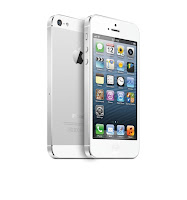 The new iPhone 5 was probably the worst kept Apple introduction. Just about every new feature was known before the actual release. Yes it has a bigger screen, yes it will run on the Sprint & Verizon 4GLTE network (faster Internet), Yes it has a different connector and yes it is made of different material then the other iPhones. Nicely it will cost the same as the iPhone 4s. It is thinner and with a new A6 processor it is much faster then the iPhone 4s. The battery life is 10% better and that is very welcome. So its an all round better phone. Is it breakout new? No, everything changed is evolutionary, not revolutionary. I'm sure the iPhone users out there will soon put this model in short supply

Motorola Mobility introduced it's first new Droid phones since Google bought the company in May 2012. The new Razr's are in 3 different price ranges and have a common theme - They are bigger, faster and have the best battery life of any cell phones. The entry level Droid Razr M has a 4.3 inch (0.3 inches larger then the iPhone5) edge to edge screen. It is the smallest, in size and weight, 4.3 inch cell phone made today. Motorola uses their kevlar skin technology to make it the lightest also. Battery life is rated at 20 hours, which is more then most Android Cell phones (iPhone 5 rated at 8 hours). The other two Razrs introduced are the Razr HD and the Razr HD Maxx. They both share a 4.7 inch screen (these are BIG phones) with HD (high def 1080p) resolution. They both have the kevlar skins and superior 4G LTE Internet capabilities. The claim to fame of the HD series is battery life. The HD is rated at 24 hours talk time while the Maxx is rated at 32 hours. Note the iPhone rating above. People hate to have to recharge their phones or to have a phone die in the middle of a call. They don't like leaving them plugged in when not in use. These bigger batteries are a new thin technology. If you are not into the iPhone type phones then I believe these new Droids will be winners.
My Verizon cell phone contract is up in November. I think I'll take a real close look at the new phones and make a choice from the ones I've discussed today. Size does matter and I'm not sure I want to wield around a BIG phone no matter what battery life it gets. If you get one of these phones let me know what you think!
I got to get on the Internet at 35,000 feet last week. Our Delta Airlines flight from San Francisco to Atlanta was outfitted with GoGo in flight Internet. I had a complimentary code to get free Internet for the flight for one device. Usually the cost is around $12 for a days use. You can always get free Delta airline info and GoGo is always having some free Internet shopping use. For example on my flight you could shop Amazon at no charge.
So how does this work?
There are two technologies available - Satellite and cell tower. GoGo mainly uses cell tower technology. They have over 100 cell towers that point upward in the US. A receiver on the plane picks up the signal and then sends out a wifi signal on the plane. Speed of this technology is comparable to 3G cell phone speed (that is better then dialup, but not much). I've checked the speed on board several planes and its never faster then 0.9 mbps (for example I have 6 mbps through Shentel cable at home). It's good for reading email, simple surfing and playing online games. Don't even think about video, though I did get tunein radio to work on a recent flight.
The other technology uses rented space on geosynchronous satellites. Row 44 is the seller of this Internet (and more) service. Southwest Airlines is the main user of Row 44 and charges $5 per flight for the service. The satellite technology has more bandwidth then the cell technology and is markedly faster. You can watch videos and live TV content on Row 44 flights. The receivers (there are 4) on the plane are more expensive then Gogo and have had some maintenance issues. Overall the Row 44 service provides what we all want - faster Internet!
While on vacation, the bed & breakfast inn where we stayed had fairly good wifi service, but spotty cell phone service. The b&b owner used two routers to cover the big house. However he had used different type routers and had left the SSID (wifi name) as the generic "linksys" and "belkin". I told the owner he needed to change the SSID name to that of his B&B. Why? Because he used security! An average user will come to his B&B and have problems logging on because most users will have previously memorized "linksys" and "belkin" sites on their pc/ipad and will have different security settings. That is why I recommend keeping those strange named SSIDs that now come with new routers (like: A09R5863Q). Once you memorize a wifi security setting its hard to change it for a particular SSID.
Also if you haven't changed your router in a while, you really need to move up to a n-band router. They are 3 times faster and cover a larger area of your business/home.
The June 29th Derecho hit PCSS with a vengeance. We were without power for 5 days and Internet for 7 days. Talk about your business crushing event. Fortunately, we had just a big mess an no real damage. Our customers suffered worse and we hope everyone is back to normal. We used our laptops and found Internet at customer sites (THANKS) So this blog will be about Power. The good, the bad and the ugly!
Your friendly power provider (Dominion Power, BARC, American Electric) is supposed to provide your residence or business with alternating current power at nominally 120 volts at 60 cycles per second (Herz). When stress hits your power provider (think storms, Hot Weather, Cold Weather, etc) one of the methods of keeping power flowing is to slightly decrease the voltage you receive. Under these conditions (a brown out) you get less then 120 volts and your computer equipment gets less DC power from their power supplies.
A way to prevent brown outs from negatively affecting your computer equipment is to use an Uninterpretable Power Supply (UPS). These batter back up systems not only give you power when the power is down, they AUGMENT the power when a brown out occurs. PCSS recommends you use a UPS with all your valuable electronics.
On the other side of the power supply equations is the Surge. When lightning strikes wires a surge is transmitted through the wires and can damage your electronics. Surge Suppressors will protect you for ONE surge. The way surge suppressors work causes them to no longer provide protection after a surge hits the wire. If you have an UPS, they will likely provide protection for more then one surge. Although a severe surge can take out even the best UPS. Most of these devices have LED indicators when they are no longer providing protection.
"You get what you pay for" is very true when it comes to power protection. Cheap (less then $15) surge suppressors provide very minimal protection. When it comes to UPS, PCSS only likes Tripp-Lite and APC brands. These are large companies, with great engineers, behind their products. They meet all US Underwriter specifications and they even help write the IEEE specifications to protect the consumer.
The best thing about power being back on? Hot water? Air Conditioning? Internet? Refrigeration? Any and all of those certainly make life more enjoyable. We are a society based on Power as we were reminded in late June.


